Why Clothing Samples Cost More Than Bulk Orders (And a Simple Trick That Can Save You Money)
Discover why sample T-shirts cost $50–$70 while bulk orders cost $3–$5. Learn the hidden costs of sampling, practical tricks to reduce costs, and when sample pricing is actually fair.
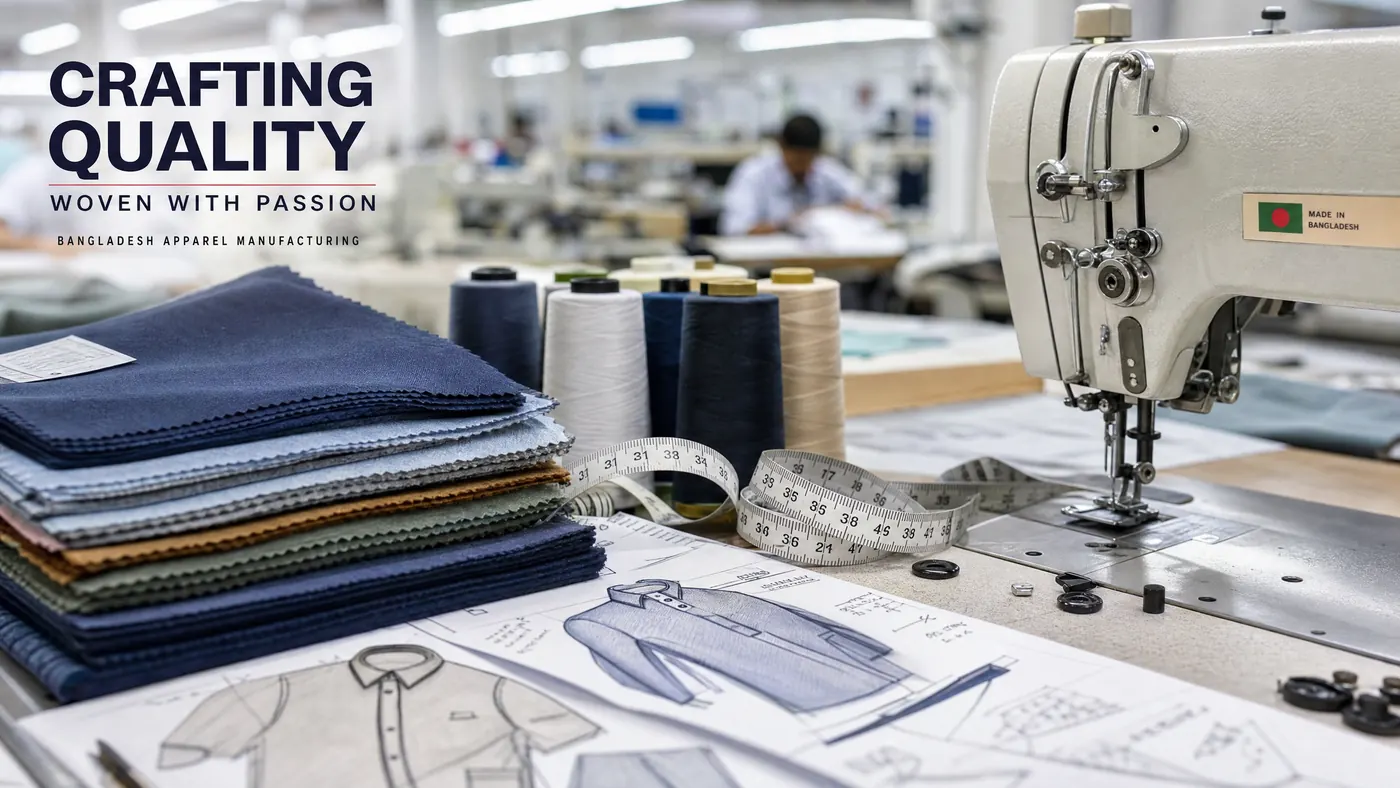
The Shock Every Startup Faces
You've found a factory. You're excited. You send a message: > "Hi! I need 2 T-shirts as samples. How much?" The reply comes back: > "Sample cost: $50–$70 per piece." Your first thought? "Wait… I only need 2 or 3 T-shirts. Why so expensive?" Then you compare it to bulk pricing. You see that in bulk orders, T-shirts might cost $3–$5 per piece. The gap feels massive. It feels like the factory is overcharging you. But here's what most startup brands don't realize: Sample pricing does NOT work like bulk production. And there's a good reason why.The Hidden Costs Nobody Talks About
Let me break down what actually happens when a factory produces your samples.1. Shipping Costs Are Brutal at Small Volumes
This is the first shock. Shipping 2–3 T-shirts internationally can still cost around $20–$40+ depending on your destination (USA, UK, Europe, Middle East, etc.). Why? Courier pricing has a minimum charge. When you use DHL, FedEx, or UPS, they don't charge based on weight alone. They charge based on: - Dimensional weight (the space the package takes up) - Minimum handling fee (usually $15–$25 just to process the shipment) - Fuel surcharge (typically 5–15% of base rate) - Destination surcharge (varies by country) So shipping 500 grams–1kg often costs almost the same whether you send 2 pieces or a few more. Real example: - 2 T-shirts to USA: ~$35 shipping - 5 T-shirts to USA: ~$38 shipping The difference? Only $3. But you're getting 2.5x more product. Compare that to bulk orders: - 500–1000 pieces to USA: ~$800–$1200 total shipping - Per-piece cost: $1.60–$2.40 per garment See the difference? At sample volume, you're paying 15–20x more per piece for shipping alone.2. Setup Costs Don't Scale Down
Here's what many buyers don't know: A sample often requires: - Pattern adjustments — If your design is custom, the factory needs to grade patterns for your specific sizing - Fabric sourcing — Ordering small quantities of specialty fabrics (often minimum 50–100 meters) - Cutting setup — Setting up cutting tables and dies (even for 2–3 pieces) - Print preparation — Design files, color matching, screen setup - Embroidery setup — Digitizing designs, threading machines, test runs - Labels and packaging — Custom labels, hang tags, packaging materials - Quality control checks — Inspection, measurements, fit testing - Employee time — Dedicated staff focused on only a few pieces (not spread across 500 units) Each of these steps has a fixed cost, regardless of quantity. For example: Screen printing setup alone can add $30–$40 to your sample cost. If you're doing embroidery? Add another $25–$50. Custom cut or unique construction? Another $20–$40. These costs exist whether you order 1 sample or 10 samples. They don't disappear just because your order is small.3. Material Waste Is Higher on Small Orders
When a factory cuts 500 pieces, they optimize the layout to minimize waste. When they cut 2 pieces? They still need to account for: - Pattern alignment (ensuring grain lines are correct) - Seam allowances (typically 0.5–1 inch on all sides) - Quality margins (cutting slightly larger to account for shrinkage) On a small order, waste percentage is much higher. Real numbers: - Bulk order (500 pieces): ~5–8% waste - Sample order (2–3 pieces): ~15–25% waste That means on a small sample, you're paying for material that gets discarded.The Profit Reality (Spoiler: There Often Isn't One)
Here's something that might surprise you: Most manufacturers are NOT making big profits from samples. In many cases, they're simply trying to recover costs. Think about it: - Shipping: $25–$35 - Setup costs: $30–$60 - Materials: $10–$15 - Labor: $15–$25 - Packaging: $5–$10 Total: $85–$145 for 2–3 pieces If the factory charges $50–$70 per piece, they're barely covering expenses. They're not getting rich from your sample order. They're hoping you'll like the quality and move to bulk production (where they actually make reasonable margins).Why Factories Offer Samples at All
If samples are so expensive to produce, why do factories bother? Because samples are the gateway to bulk orders. A factory knows: - You're a startup with limited budget - You're nervous about quality - You want to test fit, construction, and communication before committing $5,000–$20,000+ Offering samples (even at higher per-piece costs) is an investment in your relationship. They're betting that if you love the quality, you'll come back for bulk production. And that's where the real business happens.What Many Buyers Don't Realize About Sampling
Sampling is not just buying products. It's testing: - Quality — Does the fabric feel right? - Fit — Are the measurements accurate? - Construction — Are seams strong? Is the stitching even? - Workflow — How responsive is the factory? - Communication — Do they understand your vision? - Production readiness — Can they scale to your bulk order? You're essentially paying for a quality assurance process, not just garments.Practical Tricks to Reduce Sample Costs
If you understand the pricing structure, there are a few things you can do:Trick 1: Negotiate Sample Credits
Ask your factory: > "Can sample costs be adjusted into the bulk order if I confirm production?" Many suppliers can partially credit sample costs toward your first bulk order. For example: - Sample cost: $60 per piece × 2 = $120 - Bulk order: 500 pieces - Factory credits: $100 from sample costs - You pay: $120 + (bulk cost) − $100 It's not a full refund, but it helps.Trick 2: Order More Samples (Sounds Counterintuitive, But Works)
If you order 5 samples instead of 1–2, you might reduce the per-piece cost. Why? The setup cost stays similar. If the factory needs to spend $40 setting up your screen print, that cost is the same whether they print 1 piece or 5 pieces. So: - 1 sample: $40 setup + $15 material + $10 labor = $65 per piece - 5 samples: $40 setup ÷ 5 = $8 setup per piece + $15 material + $10 labor = $33 per piece You might pay almost the same total cost, but get 5x more product to test. This also gives you: - Multiple sizes to test (XS, S, M, L, XL) - Color variations (test different dye lots) - Backup samples (in case one gets damaged in shipping)Trick 3: Consolidate Your Design Requests
Don't ask for 10 different design variations in your first sample. Pick ONE design. Get it right. Then iterate. Each design variation = new setup costs. So consolidating reduces costs significantly.Trick 4: Use Standard Materials When Possible
Custom fabrics = higher costs. If you can use a standard 100% cotton jersey or common blend, the factory already has it in stock. No special sourcing. No minimum orders. Lower cost. Save the custom fabrics for bulk production (when the cost is spread across 500+ pieces).The Real Cost Breakdown: What You're Actually Paying For
Let me give you a realistic breakdown of what a $60 sample T-shirt actually costs: | Cost Item | Amount | Notes | |-----------|--------|-------| | Fabric | $8–$12 | 100% cotton, 180–220 GSM | | Shipping (allocated) | $15–$20 | Divided across 2–3 pieces | | Setup costs (allocated) | $12–$18 | Cutting, QC, packaging setup | | Labor | $10–$15 | Cutting, sewing, finishing | | Printing/Embroidery | $8–$15 | If applicable | | Packaging & Labels | $3–$5 | Hang tags, poly bag, box | | Factory margin | $5–$10 | Thin margin, mostly cost recovery | | Total | $61–$95 | Realistic range | When you see a $60 sample price, you're not paying for "overcharging." You're paying for the actual cost of producing a single piece in a low-volume environment.How Bulk Pricing Works Differently
For comparison, here's what a $3.50 bulk T-shirt costs (500+ pieces): | Cost Item | Amount | Notes | |-----------|--------|-------| | Fabric | $1.20–$1.60 | Bulk discount, optimized cutting | | Labor | $0.80–$1.20 | Spread across 500 pieces | | Printing/Setup | $0.30–$0.50 | Setup divided by 500 pieces | | Shipping (allocated) | $0.15–$0.25 | Bulk shipping rate | | Packaging | $0.20–$0.30 | Bulk packaging materials | | Factory margin | $0.50–$0.75 | Reasonable profit | | Total | $3.15–$4.60 | Realistic bulk range | See the difference? In bulk, the setup cost ($30–$40) is divided by 500 pieces = $0.06–$0.08 per piece. In samples, that same $30–$40 setup is divided by 2–3 pieces = $10–$20 per piece. That's the real reason for the price difference.The Conversation You Should Have With Your Factory
When discussing samples, ask: > "Can you break down the sample cost? What's included in the $60?" A good factory will tell you: - Fabric cost - Setup costs (printing, cutting, etc.) - Labor - Shipping - Packaging If they give you a breakdown, you know they're being transparent. If they refuse to explain, that's a red flag.When Sample Costs Are Actually Too High
That said, not all sample pricing is fair. Red flags: - Factory charges $100+ per T-shirt sample (unless it's heavily customized) - Factory won't explain the breakdown - Factory charges the same price for samples and bulk (they should be different) - Factory requires payment upfront without references or verification If you see these red flags, get quotes from other factories.The Bottom Line
Sample costs are high because:Ready to Order Samples?
If you're a startup brand looking for low-MOQ manufacturing with transparent pricing, [Brandex Sourcing](/guides/moq-pricing) offers samples starting from 1 unit with clear cost breakdowns. We believe in transparency. We'll explain exactly what you're paying for. Learn more: - [MOQ & Pricing Guide](/guides/moq-pricing) — Understand our sample and bulk pricing structure - [How to Start a Clothing Brand](/guides/start-brand) — Complete guide for startups - [Private Label Manufacturing](/guides/custom-apparel) — Custom production from concept to delivery - [Quality Control Process](/faq) — How we ensure sample quality (see FAQ) - [Wholesale T-Shirt Manufacturing Guide 2026](/blog/wholesale-tshirt-manufacturing-guide-2026) — Complete sourcing guide - [What to Send a Factory for a Quote](/blog/what-to-send-a-factory-for-a-private-label-quote) — Prepare your inquiry properlyQuestions About Sample Pricing?
Still confused about why samples cost what they do?Related Articles
- [Alibaba Gold Supplier vs. Trade Assurance: What You Need to Know](/blog/alibaba-gold-supplier-trade-assurance-bangladesh) - [100+ Clothing Manufacturing Questions Answered by a Factory Owner](/blog/clothing-manufacturing-questions-answered-by-factory-owner) - [The Complete Guide to Private Label Apparel Manufacturing](/guides/start-brand) - [Wholesale T-Shirt Manufacturing Guide 2026](/blog/wholesale-tshirt-manufacturing-guide-2026)Have you been shocked by sample pricing? What surprised you most during your clothing sourcing journey? Share your experience in the comments below.
Brandex Sourcing is a Bangladesh-based knitwear manufacturer specializing in low-MOQ production for startup and growing brands. We've been helping brands launch and scale since 2021.
Ready to Start?
Have questions about this topic?
Reach out to Brandex Sourcing directly. We reply within 3 hours on WhatsApp and help brands plan their first or next production order.
Message us on WhatsAppAbout the Author
Mosiur Rahman
Founder and CEO of Brandex Sourcing with 8+ years of experience in apparel manufacturing. Specializes in helping small and growing brands launch and scale their private label clothing lines.
View LinkedIn ProfileKeep Reading
Related Articles
Wholesale T-Shirt Manufacturing Guide 2026: What Buyers Should Know Before Sourcing from Bangladesh
A founder's guide to wholesale T-shirt manufacturing from Bangladesh in 2026. Learn FOB prices, MOQ, GSM, fabrics, sampling, shipping, activewear options, and buyer mistakes to avoid.
How to Choose a Private Label T-Shirt Manufacturer in Bangladesh
Learn how startup clothing brands can choose a private label T-shirt manufacturer in Bangladesh by checking MOQ, samples, fabric, QC, communication, and factory proof.
Low MOQ Private Label T-Shirt Manufacturing: What Startup Brands Should Know
Low MOQ private label T-shirt manufacturing helps startup brands test products, but buyers must understand fabric, trims, labels, sampling, pricing, and production limits.