Consistent Production & Quality Guarantees: How to Scale Your Brand Without Compromising
Most growing brands face a critical challenge: maintaining the same quality across multiple production runs. Learn how Brandex Sourcing ensures consistency, reliability, and brand integrity at scale.
The Consistency Problem: Why Most Brands Struggle
You launch your first production run. Quality is perfect. Your customers love it. You get repeat orders. Then you place a second order. The fabric feels different. The stitching isn't as tight. The colors don't match exactly. Your customers notice. Your brand reputation takes a hit. This is the consistency problem, and it's one of the biggest challenges growing brands face when scaling production.Why Does This Happen?
What Consistent Production Actually Means
Consistency is not just about quality — it's about predictability and trust. When a brand works with Brandex Sourcing, they get:1. Locked-In Specifications
- Your approved sample becomes the production standard - Fabric specifications, GSM, color, fit, stitching — all documented - Every production run references the same approved sample - No surprises, no deviations2. Dedicated Production Workflow
- Your order is assigned to the same production team when possible - The team becomes familiar with your specific requirements - They know your brand's quality standards intimately - Consistency improves with each run3. Systematic Quality Control
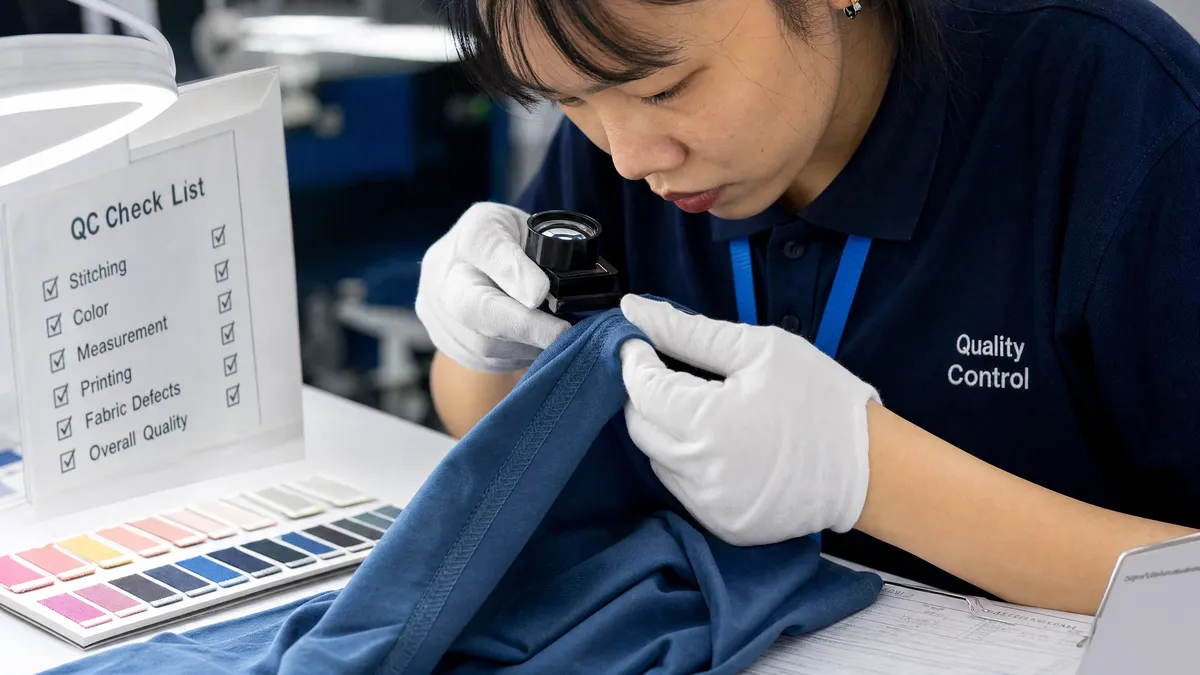
- Pre-production inspection: fabric quality check, color verification - In-line inspection: random sampling during production (every 50-100 units) - Final inspection: 100% visual check before packing - Measurement verification: fit consistency across all sizes - Documentation: every batch has a QC report4. Fabric & Material Consistency
- We work with the same fabric suppliers for your products - When fabric is sourced, we verify it matches previous batches - If there's a change, we notify you and get approval - We maintain fabric specifications documentation for your brand5. Color Matching & Dye Consistency
- Color samples are kept and referenced for every production run - We use color matching standards (Pantone, RGB, etc.) - Dye batches are tested before full production - If colors don't match, we stop and re-dye6. Fit & Sizing Consistency
- Your approved sample defines the fit for all future runs - We measure key points on every size (chest, sleeve length, body length) - Fit tolerance is documented and maintained - If a size doesn't match, it's flagged and correctedThe Brandex Approach: Repeat Production Excellence
Here's how we ensure consistency across your multiple production runs:Phase 1: Sample Development & Approval
- We create your sample with your exact specifications - You approve the fabric, fit, stitching, print/embroidery - We document everything: fabric supplier, GSM, color codes, measurements - This becomes your production standardPhase 2: Production Run 1
- We produce your first bulk order using the approved sample as reference - Full QC workflow: pre-production, in-line, final inspection - We provide a QC report with measurements, defect counts, batch details - You receive consistent, high-quality productsPhase 3: Repeat Orders
- For order 2, 3, 4+, we reference your original approved sample - Same fabric supplier, same specifications, same QC workflow - The production team is familiar with your brand's requirements - Quality improves because we've refined the processPhase 4: Continuous Improvement
- We track production data across all your runs - We identify patterns and optimize where possible - We communicate any changes (fabric availability, supplier updates) - Your brand benefits from accumulated expertiseReal Example: How Consistency Works in Practice
Brand: Arox Fitness (Denmark) Arox needed 30,000 fitness T-shirts for their growing brand. They required: - Consistent fit across all sizes - Exact color matching (Pantone code provided) - High-quality stitching with reinforced neck rib - Repeat production reliability What we did:How to Ensure Consistency With Your Manufacturer
If you're working with a factory (or considering Brandex), here's what to demand:1. Get Everything in Writing
- Approved sample specifications - Fabric details (supplier, GSM, fiber content) - Color codes (Pantone, RGB, hex) - Fit measurements for each size - Acceptable tolerance ranges2. Require a QC Workflow
- Pre-production inspection - In-line sampling during production - Final 100% visual inspection - Measurement verification - Defect documentation3. Ask for Documentation
- QC reports for every batch - Production photos - Fabric test results - Measurement data4. Build a Relationship
- Work with the same factory for repeat orders - The team learns your requirements - Quality improves over time - They become invested in your brand's success5. Communicate Changes Early
- If you need to change fabric, fit, or design, tell them in advance - Request a new sample before full production - Don't assume they'll "figure it out"The Cost of Inconsistency
Inconsistent quality has real costs: - Customer returns: Unhappy customers return products or leave bad reviews - Brand damage: Your reputation suffers with each inconsistent batch - Wasted inventory: You can't sell products that don't meet your standards - Margin erosion: You end up discounting or destroying inventory - Lost repeat customers: Customers won't reorder if quality is unpredictable A brand that maintains consistency can charge premium prices and build loyal customers. A brand with inconsistent quality gets stuck in a discount spiral.Why Brandex Sourcing is Built for Consistent Production
We're not a commodity factory. We're built specifically for brands that need: - Repeat production reliability: Same quality, every time - Long-term partnerships: We invest in your brand's success - Systematic QC: Not just "good enough," but documented and measurable - Dedicated teams: Your production team knows your brand - Transparent communication: We tell you what's happening, every step When you work with Brandex, you're not just buying products. You're building a manufacturing partnership that grows with your brand.Next Steps: Start Your Consistent Production Journey
If you're ready to scale your brand with confidence:Key Takeaways
- Consistency is a choice: It requires systems, documentation, and commitment - Your approved sample is your production standard: Everything else references it - QC workflow is non-negotiable: Pre-production, in-line, final inspection - Repeat orders improve quality: The team learns your requirements - Documentation matters: You need proof of consistency - Long-term partnerships work: Factories that care about your brand deliver better results Ready to build a brand on consistent, reliable production? Let's talk.Ready to Start?
Have questions about this topic?
Reach out to Brandex Sourcing directly. We reply within 3 hours on WhatsApp and help brands plan their first or next production order.
Message us on WhatsAppAbout the Author
Mosiur Rahman
Founder and CEO of Brandex Sourcing with 8+ years of experience in apparel manufacturing. Specializes in helping small and growing brands launch and scale their private label clothing lines.
View LinkedIn ProfileKeep Reading
Related Articles
Wholesale T-Shirt Manufacturing Guide 2026: What Buyers Should Know Before Sourcing from Bangladesh
A founder's guide to wholesale T-shirt manufacturing from Bangladesh in 2026. Learn FOB prices, MOQ, GSM, fabrics, sampling, shipping, activewear options, and buyer mistakes to avoid.
How to Choose a Private Label T-Shirt Manufacturer in Bangladesh
Learn how startup clothing brands can choose a private label T-shirt manufacturer in Bangladesh by checking MOQ, samples, fabric, QC, communication, and factory proof.
Low MOQ Private Label T-Shirt Manufacturing: What Startup Brands Should Know
Low MOQ private label T-shirt manufacturing helps startup brands test products, but buyers must understand fabric, trims, labels, sampling, pricing, and production limits.