Best GSM for Private Label T-Shirts: How to Choose Fabric Weight
Understand GSM for private label T-shirts and how fabric weight affects comfort, price, durability, shipping, and brand positioning.
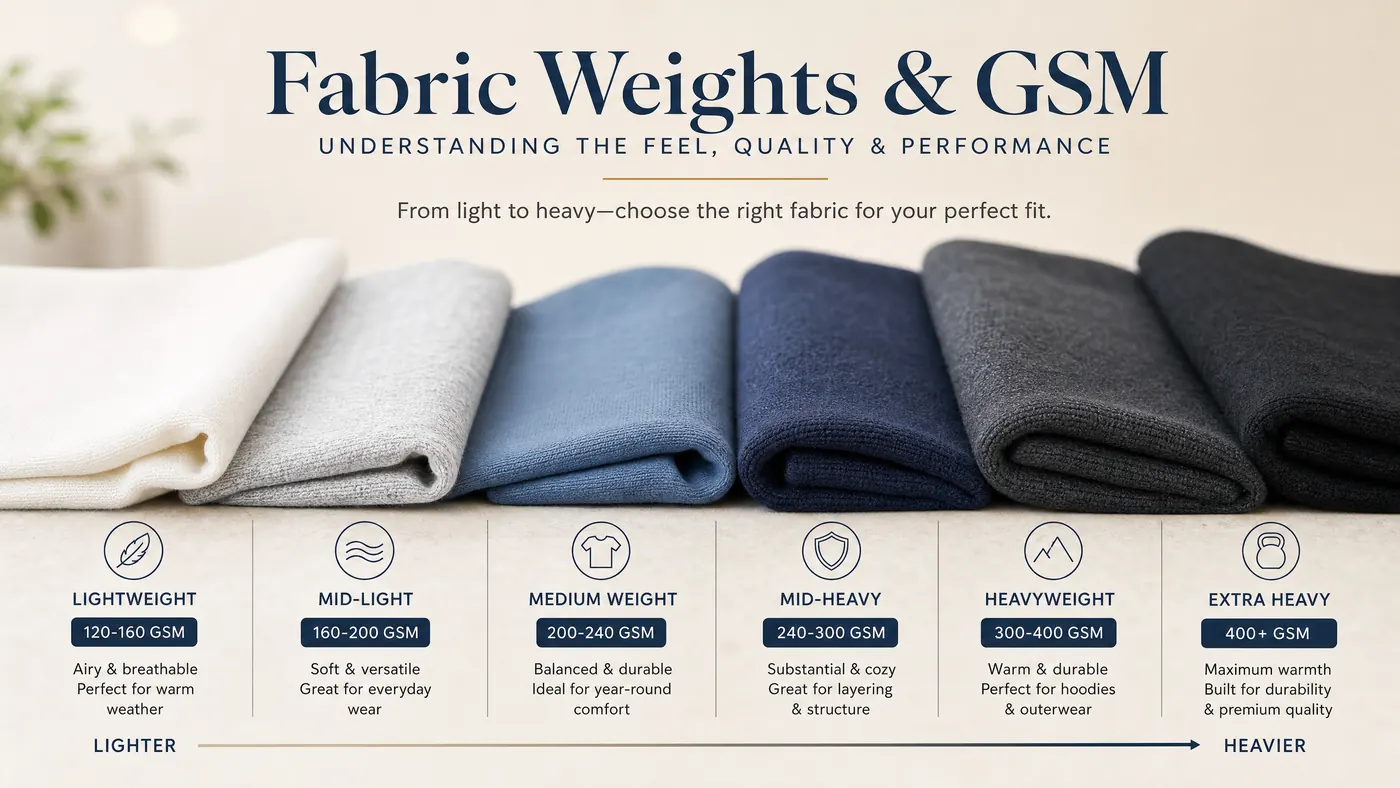
GSM means grams per square meter. In simple terms, it tells you how heavy a fabric is.
For private label T-shirts, GSM affects feel, thickness, cost, comfort, durability, shipping weight, and brand positioning. Choosing the wrong GSM can create problems even if the design looks good.
Lightweight T-Shirts (140-160 GSM)
Lightweight T-shirts usually fall around 140–160 GSM. These can work for hot weather, promotional T-shirts, or budget-friendly private label products. They feel lighter but may not give the structured feel some fashion brands want.Midweight T-Shirts (170-200 GSM)
Midweight T-shirts often fall around 170–200 GSM. This range is popular for everyday wear, brand merchandise, startup clothing brands, and many private label T-shirt collections. It gives a balance between comfort, cost, and durability.Heavier T-Shirts (220+ GSM)
Heavier T-shirts can be 220 GSM or above. These are often used for oversized streetwear, boxy fits, or premium-positioned private label clothing. But heavier fabric also increases cost and shipping weight.Activewear Considerations
For private label activewear, GSM alone is not enough. Fabric composition matters. Cotton, polyester, spandex, polycotton, and blended fabrics behave differently. Stretch, sweat handling, shrinkage, and recovery are important.Choosing the Right GSM
A common mistake is choosing high GSM only because it sounds more premium. A heavy T-shirt is not always the best T-shirt. The right GSM depends on your customer, climate, fit, price point, and brand positioning. At Brandex Sourcing, we help clothing brands choose practical fabric options for private label T-shirts and activewear based on product use, budget, and production goals. GSM is important, but it should never be chosen alone. Fit, fabric composition, finishing, and customer expectation matter just as much.Ready to Start?
Have questions about this topic?
Reach out to Brandex Sourcing directly. We reply within 3 hours on WhatsApp and help brands plan their first or next production order.
Message us on WhatsAppAbout the Author
Mosiur Rahman
Founder and CEO of Brandex Sourcing with 8+ years of experience in apparel manufacturing. Specializes in helping small and growing brands launch and scale their private label clothing lines.
View LinkedIn ProfileKeep Reading
Related Articles
Wholesale T-Shirt Manufacturing Guide 2026: What Buyers Should Know Before Sourcing from Bangladesh
A founder's guide to wholesale T-shirt manufacturing from Bangladesh in 2026. Learn FOB prices, MOQ, GSM, fabrics, sampling, shipping, activewear options, and buyer mistakes to avoid.
How to Choose a Private Label T-Shirt Manufacturer in Bangladesh
Learn how startup clothing brands can choose a private label T-shirt manufacturer in Bangladesh by checking MOQ, samples, fabric, QC, communication, and factory proof.
Low MOQ Private Label T-Shirt Manufacturing: What Startup Brands Should Know
Low MOQ private label T-shirt manufacturing helps startup brands test products, but buyers must understand fabric, trims, labels, sampling, pricing, and production limits.