Best Fabric for Embroidered Logo Shirts and Polos
Direct Answer
Which fabrics take embroidery cleanly, why light and stretchy knits pucker, and what to approve on a stitch-out. Brandex Sourcing supports custom apparel sampling, private label development, recurring bulk production, quality control, packing, and export coordination from Bangladesh for startup and growing brands.
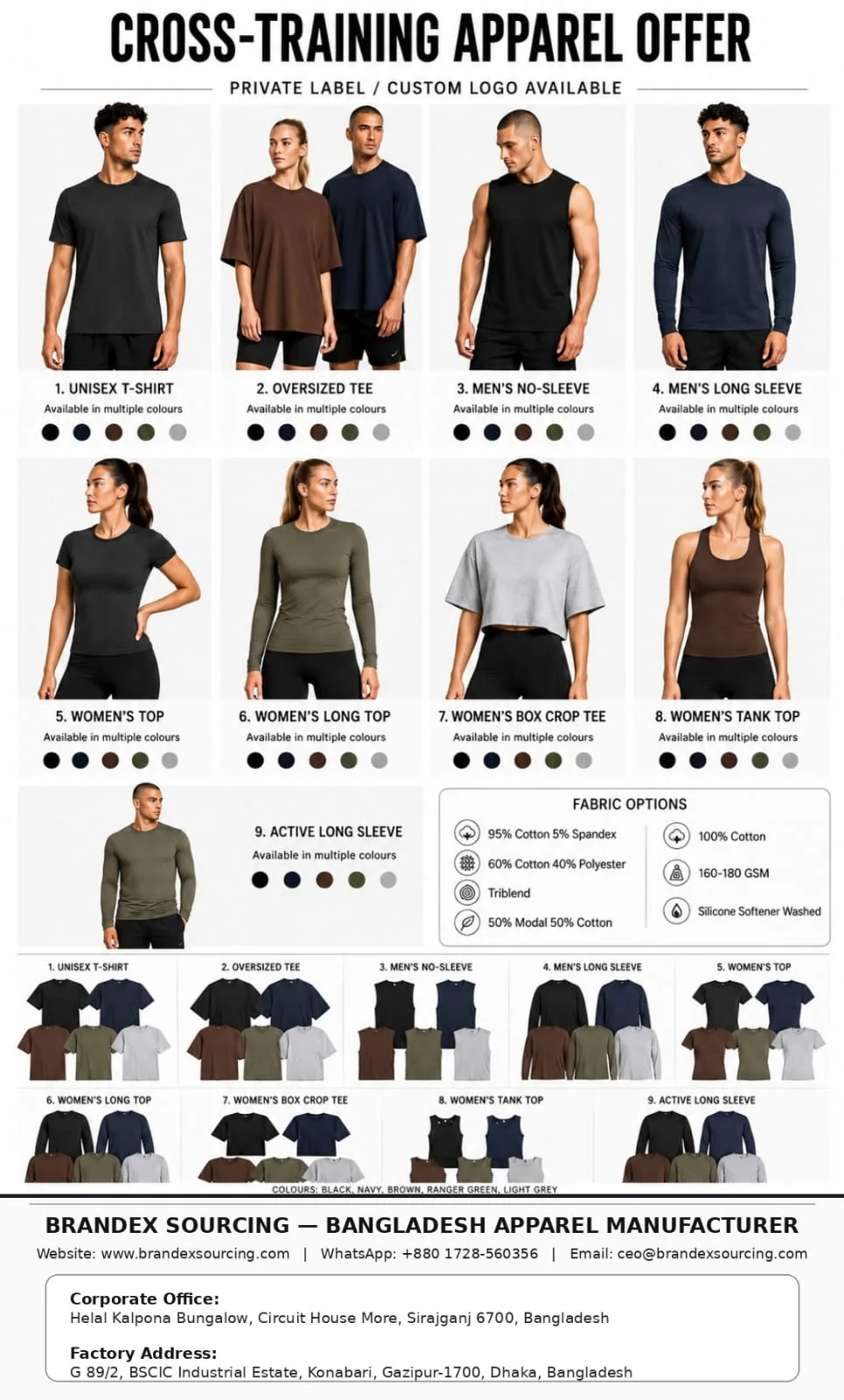
- Factory focus: T-shirts, polo shirts, hoodies, activewear, fitness wear, and private label knitwear
- Indicative bulk pricing for many projects is often $2-$8 per unit before shipping, duties, and special requirements
- Sample cost and timing are confirmed after reviewing the specification and material availability
- OEKO-TEX or GOTS-certified fabric and certified partner fabric or dyeing facilities can be sourced when requested, with scope verified per order
- Page topic: Best Fabric for Embroidered Logo Shirts
Direct Answer
Embroidery needs a stable ground. The best fabrics for embroidered logo shirts are combed cotton or poly pique at 200-240 GSM for polos, heavier combed cotton jersey at 180-220 GSM for t-shirts, and stable combed cotton-polyester blends. Very light jersey below about 160 GSM and highly elastic knits are the usual causes of puckering and distorted lettering, because the fabric moves under the needle and cannot recover around dense stitching. Combed ring-spun yarn helps small text stay legible by giving an even ground with less needle deflection. Below roughly 4-5 mm cap height, letters begin to close up regardless of fabric, so a woven patch or badge is often the better answer for very small or highly detailed marks.
Last updated: July 26, 2026
Who This Guide Is For
- Corporate and uniform buyers ordering embroidered polos
- Brands whose first embroidery sample came back puckered
- Anyone choosing between direct embroidery and a woven patch
Key Facts
- Polos: combed cotton or poly pique at 200-240 GSM
- T-shirts: heavier combed cotton jersey at 180-220 GSM
- Below ~160 GSM and on stretchy knits, puckering risk rises sharply
- Approve a stitch-out on the actual production fabric and colour, not a swatch
Why embroidery needs a stable ground
Embroidery punches thousands of needle penetrations through the fabric and pulls thread tight across the surface. A stable fabric absorbs that without moving. A light or stretchy knit does not: it draws in around the design, and when it relaxes after the hoop is released the surface ripples. That is puckering, and no amount of backing fully fixes a fabric that was too light for the design in the first place.
- Pique is structurally more stable than plain jersey, which is why polos take embroidery well
- Heavier jersey (180-220 GSM) embroiders far more predictably than light jersey
- High-elastane knits are the least suitable ground for dense embroidery
- Denser designs need more stable fabric — the two decisions are linked, not separate
Stitch density and design limits
The design itself is half the problem. A logo drawn for print does not automatically translate to thread. Fine hairlines, tight counters in letters, and dense fills on a knit all cause trouble. As a rough working limit, letters below about 4-5 mm cap height start to close up as thread fills the gaps, and gradients and photographic detail do not translate at all. Digitising quality — how the artwork is converted to a stitch file — matters as much as the fabric.
- Simplify fine detail before digitising rather than after a failed sample
- Dense fills pull more — consider a lighter fill or an outline on knit fabrics
- Very small or highly detailed marks: use a woven patch or badge instead
- Ask to see the stitch count; unusually high counts on light fabric are a warning
Backing, and what a buyer needs to know about it
Backing (stabiliser) sits behind the fabric during stitching and carries some of the stress. Cut-away backing stays permanently and is the normal choice for knits because it keeps supporting the stitches through washing. Tear-away is removed after stitching and suits stable wovens. You do not need to specify this yourself, but you should know it exists, because a supplier using tear-away on a knit to save cost is a common cause of designs that look fine on delivery and distort after a few washes.
- Cut-away backing for knits — permanent support through washing
- Tear-away for stable wovens
- Ask what backing was used if a sample distorts after washing
- Backing choice shows up after laundering, not on the day of delivery
What to approve before bulk
The single most useful thing a buyer can do is insist the stitch-out is done on the actual production fabric in the actual colour, not on a generic swatch. Thread colour reads differently against different grounds, and stitch behaviour differs by fabric. Brandex Sourcing produces physical samples in about seven days at a standard MOQ of 50 pieces per style and colour. Note that the standard sample is not laundered; wash testing is available on request and adds time, which is worth doing when embroidery durability is the concern.
- Stitch-out on the real production fabric and colour
- Check the reverse for puckering, not just the face
- Wash the approved sample before bulk if the shirt will be laundered often
- Confirm thread colour against the garment under daylight, not office lighting
Buyer Questions This Page Answers
- What is the best fabric for embroidered logo shirts? Combed cotton or poly pique at 200-240 GSM for polos, and heavier combed cotton jersey at 180-220 GSM for t-shirts. Stable combed cotton-polyester blends also embroider well. The common factor is a stable ground that does not move under the needle or draw in around dense stitching.
- Why does embroidery pucker on t-shirts? Because the fabric is too light or too stretchy for the design. Embroidery pulls thread tight across the surface and the fabric draws in around it; when it relaxes, the surface ripples. Light jersey below about 160 GSM and high-elastane knits are the usual culprits. Using tear-away backing on a knit instead of cut-away makes it worse over time.
- How small can embroidered text be? As a working limit, letters below about 4-5 mm cap height start to close up as thread fills the counters, regardless of fabric. Below that, or for very fine detail, a woven patch or badge usually reproduces the mark better than direct embroidery.
- Is pique better than jersey for embroidery? Generally yes. Pique has a more stable structure than plain jersey, which is a large part of why polos are the default corporate embroidered garment. Jersey can embroider well too, but it needs more weight — 180-220 GSM rather than a light retail tee.
Related Brandex Sourcing Pages
Mosiur Rahman, founder of Brandex Sourcing
WhatsApp: +880 1728 560 356 · Call: +880 1728 560 356 · Email: ceo@brandexsourcing.com
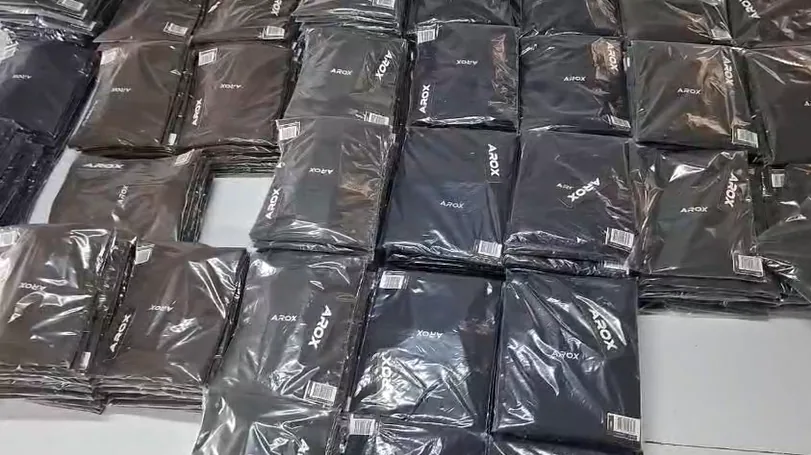
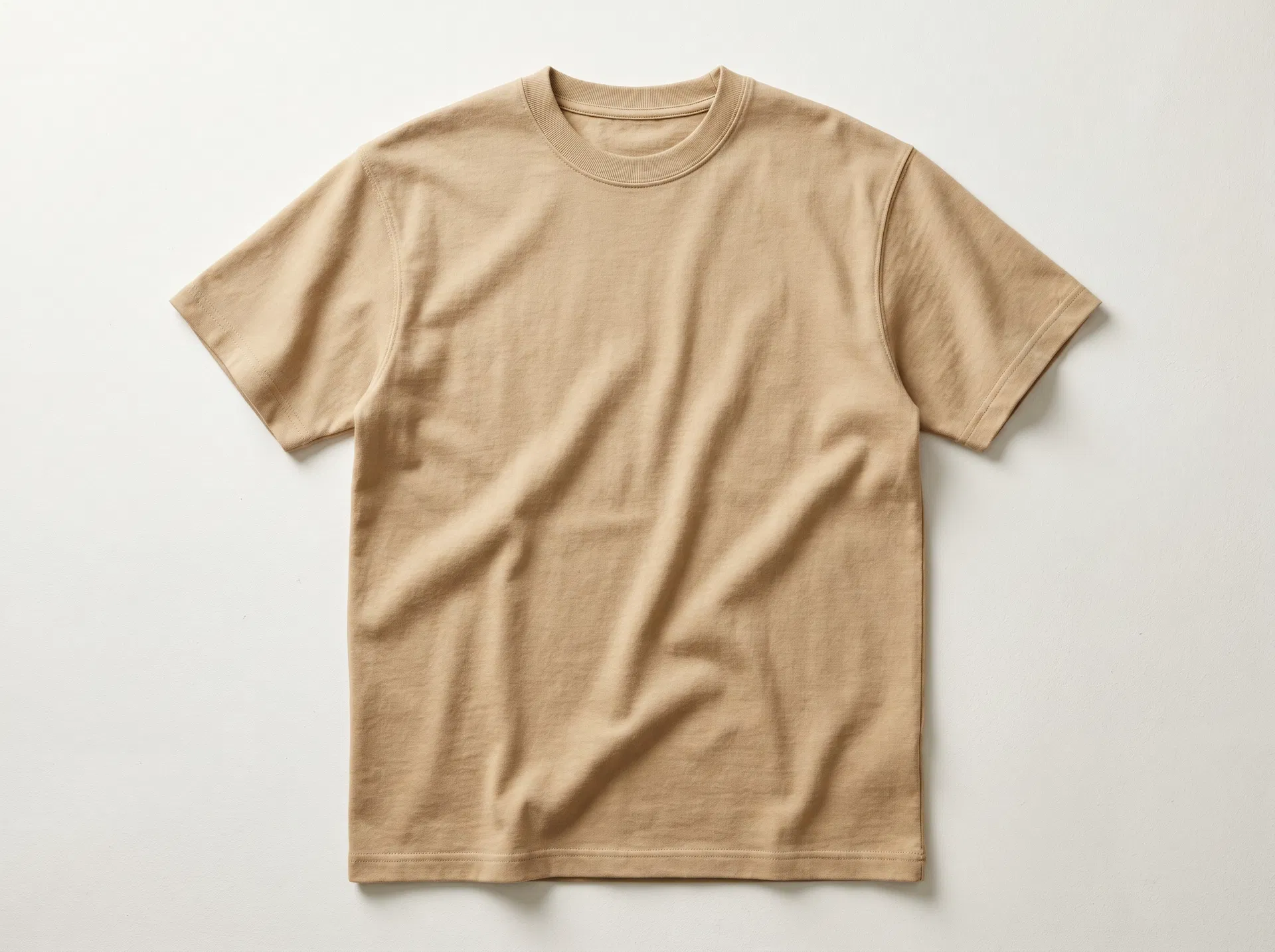
Brandex Sourcing Product and Factory Proof Images
Representative product, packing, and factory workflow images for Best Fabric For Embroidered Logo Shirts buyers evaluating Brandex Sourcing as a Bangladesh apparel manufacturer.