Most Durable Fabric for Corporate Logo Shirts Worn Daily
Direct Answer
Which fabrics survive daily wear and weekly washing on corporate logo shirts: blends, GSM, pilling, colorfastness and what to spec. Brandex Sourcing supports custom apparel sampling, private label development, recurring bulk production, quality control, packing, and export coordination from Bangladesh for startup and growing brands.
- Factory focus: T-shirts, polo shirts, hoodies, activewear, fitness wear, and private label knitwear
- Indicative bulk pricing for many projects is often $2-$8 per unit before shipping, duties, and special requirements
- Sample cost and timing are confirmed after reviewing the specification and material availability
- OEKO-TEX or GOTS-certified fabric and certified partner fabric or dyeing facilities can be sourced when requested, with scope verified per order
- Page topic: Most Durable Fabric for Corporate Logo Shirts
Direct Answer
For corporate logo shirts worn several times a week, the most durable practical choice is a combed ring-spun cotton-polyester blend jersey at 180-200 GSM for t-shirts, and a combed cotton or poly pique at 200-240 GSM for polo shirts. Polyester content is what carries colour retention, shape stability and abrasion resistance through repeated laundering, which is why 50/50 and 65/35 poly-cotton have been the long-standing uniform choice. The trade-off is pilling: polyester fibres are strong enough to hold pills on the fabric face instead of shedding them the way cotton does, so a blend can show surface fuzz sooner at the collar, underarm and cuff rib. Ring-spun yarn has a more even structure than open-end and pills less for that reason, so specify combed ring-spun and approve pilling, shrinkage and colourfastness on a washed sample before bulk.
Last updated: July 26, 2026
Who This Guide Is For
- Companies specifying a staff uniform that has to last a full year of weekly washing
- Uniform resellers comparing blends before committing to a programme
- Brands moving from event t-shirts into repeat corporate orders
Key Facts
- 180-200 GSM for daily-wear tees, 200-240 GSM for polos
- 50/50 and 65/35 poly-cotton carry colour and shape best through repeat washing
- Anti-pill or enzyme bio-polish finishing from 1,000 pieces (500 possible with extra fees)
- Reduction clearing is performed on dark poly-cotton shades to prevent colour crocking
Why polyester content decides service life
A shirt worn twice a week is washed roughly a hundred times a year. Cotton is comfortable but loses dimensional stability and colour depth faster under that load, because the fibre swells and relaxes with every wet-dry cycle. Polyester does not absorb water the same way, so it holds dye, resists abrasion at rub points and returns to shape. That is the whole reason uniform programmes settled on poly-cotton decades ago rather than 100% cotton.
- 65/35 poly-cotton: the most wash-durable of the common blends, firmest hand
- 50/50: the usual compromise between durability and comfort
- 100% cotton: best handfeel and print result, shortest service life under heavy washing
- Poly-spandex: for activity, not for office wear — it is a different use case
Pilling is the real complaint, and it is predictable
Pilling is not a defect so much as a consequence. All fabrics shed short fibre ends; the question is whether they fall away or stay attached. Cotton pills break off because the fibre is weak. Polyester pills stay attached because the fibre is strong, which is why a blend looks fuzzier sooner even though it is objectively lasting longer. Yarn type matters more than most buyers expect: open-end yarn has more exposed fibre ends than ring-spun, so it pills faster from day one.
- Specify combed ring-spun yarn if pilling is a stated concern
- Anti-pill or enzyme bio-polish finishing is available from 1,000 pieces per order
- Anti-pill can drop to 500 pieces with extra fees
- Check the collar, underarm and polo cuff rib on a washed sample — pills show there first
Dark shades, crocking and reduction clearing
The most common corporate complaint after pilling is a navy or black shirt rubbing colour onto a seatbelt, a bag strap or a white collar. That is crocking, and it happens when unfixed disperse dye is left sitting on the polyester surface after dyeing. Reduction clearing is the wash step that removes it. Brandex Sourcing performs reduction clearing after disperse dyeing on dark poly-cotton shades. If you are comparing suppliers, ask each one directly whether they do — many at low MOQ do not, and it is the single question that separates a uniform-capable dyehouse from a general one.
- Ask for a dry and wet rub test on white cloth before approving a dark shade
- Test the actual production colour, not a swatch card
- Dark navy, black and charcoal carry the highest crocking risk
How to specify durability on the order
Durability is not a checkbox, it is a set of decisions you write into the tech pack. At Brandex Sourcing the standard MOQ is 50 pieces per style and colour at roughly $2-$8 per unit, where the $2 end is reachable when the fabric is already in stock. Where a corporate programme needs finishing or documentation, the numbers change: anti-pill finishing and azo-free documentation run at 1,000 pieces and $4-$10 per unit. Repeat orders can be re-run to the same colour and quality against the original approved sample, which is what makes a uniform programme workable a year later when you need to replace shirts or add sizes.
- Name the yarn (combed ring-spun or carded), the blend ratio, and the GSM
- Ask for compacted or pre-shrunk fabric if fit after washing matters — available on request
- Approve a washed sample, not a dry one — the standard 7-day sample is not laundered
- Third-party test reports are available on request at buyer cost, adding about 10 days
Buyer Questions This Page Answers
- What is the most durable fabric for corporate logo shirts worn daily? A combed ring-spun cotton-polyester blend jersey at 180-200 GSM for t-shirts, or combed cotton or poly pique at 200-240 GSM for polos. Polyester content carries colour retention, shape stability and abrasion resistance through repeated washing, which is why 50/50 and 65/35 blends are the long-standing uniform choice.
- Why do poly-cotton uniform shirts pill more than cotton? Polyester fibres are strong enough to hold pills on the fabric surface instead of shedding them the way weaker cotton fibres do. The shirt is lasting longer, but it looks fuzzier sooner. Combed ring-spun yarn pills less than open-end because its structure is more even, and anti-pill finishing is available from 1,000 pieces.
- How do I stop dark uniform shirts rubbing colour onto seatbelts and collars? That is crocking, caused by unfixed disperse dye left on the polyester surface. Reduction clearing after dyeing removes it, and Brandex Sourcing performs this on dark poly-cotton shades. Ask any supplier whether they do, and test a dark sample with a dry and wet rub on white cloth before approving bulk.
- What GSM should a corporate polo shirt be? 200-240 GSM in combed cotton or poly pique is the usual range for a polo worn several times a week. Lighter than 200 GSM tends to lose collar shape faster under repeat washing, which is the first thing that makes a uniform look worn out.
Related Brandex Sourcing Pages
Mosiur Rahman, founder of Brandex Sourcing
WhatsApp: +880 1728 560 356 · Call: +880 1728 560 356 · Email: ceo@brandexsourcing.com
Brandex Sourcing Product and Factory Proof Images
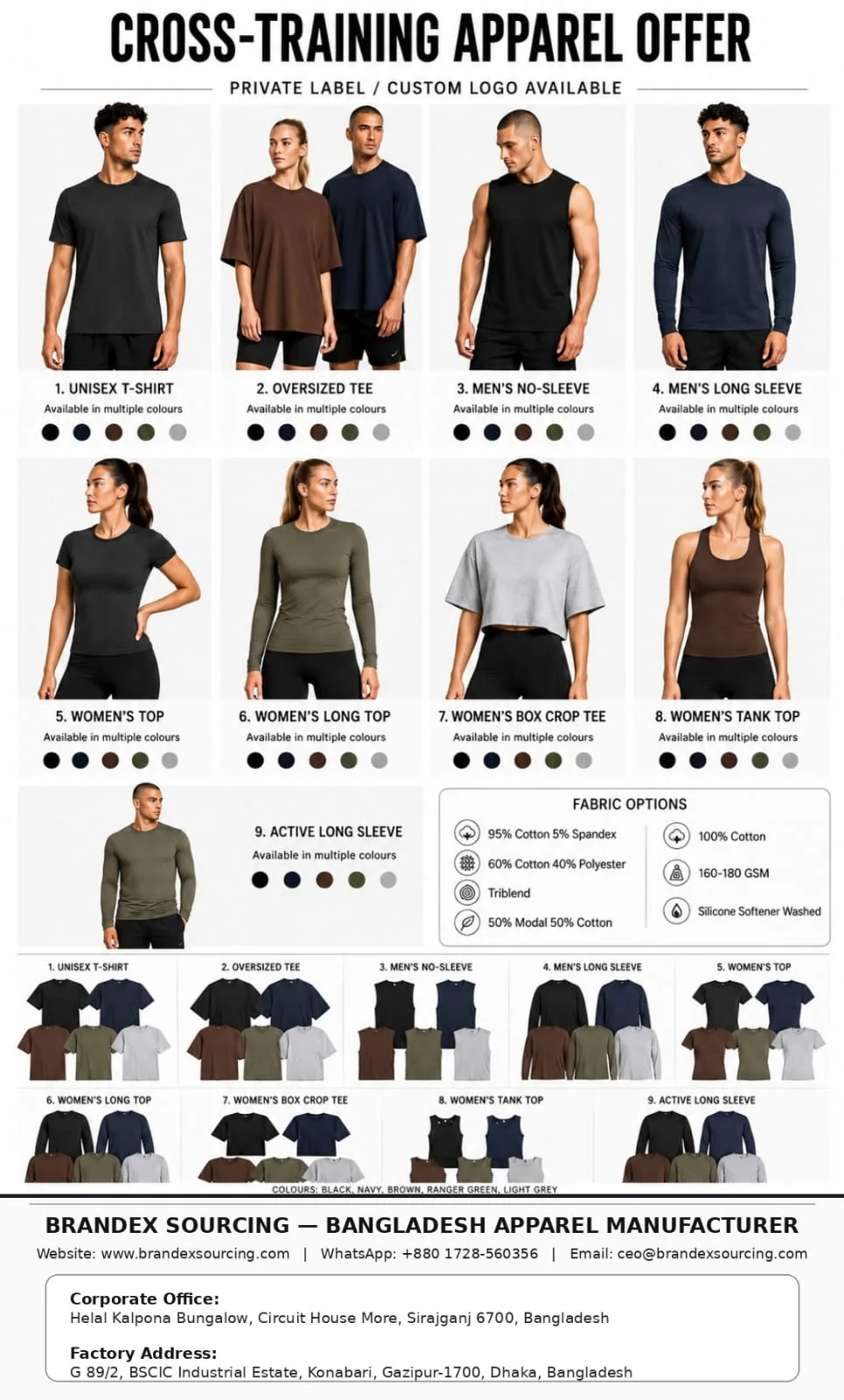
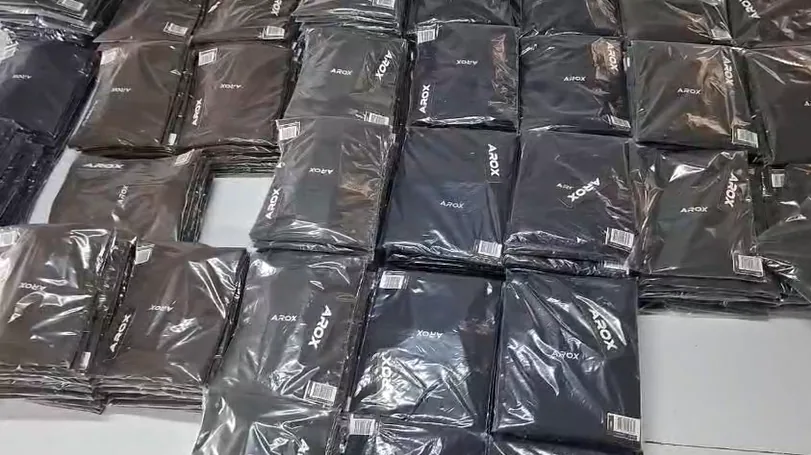
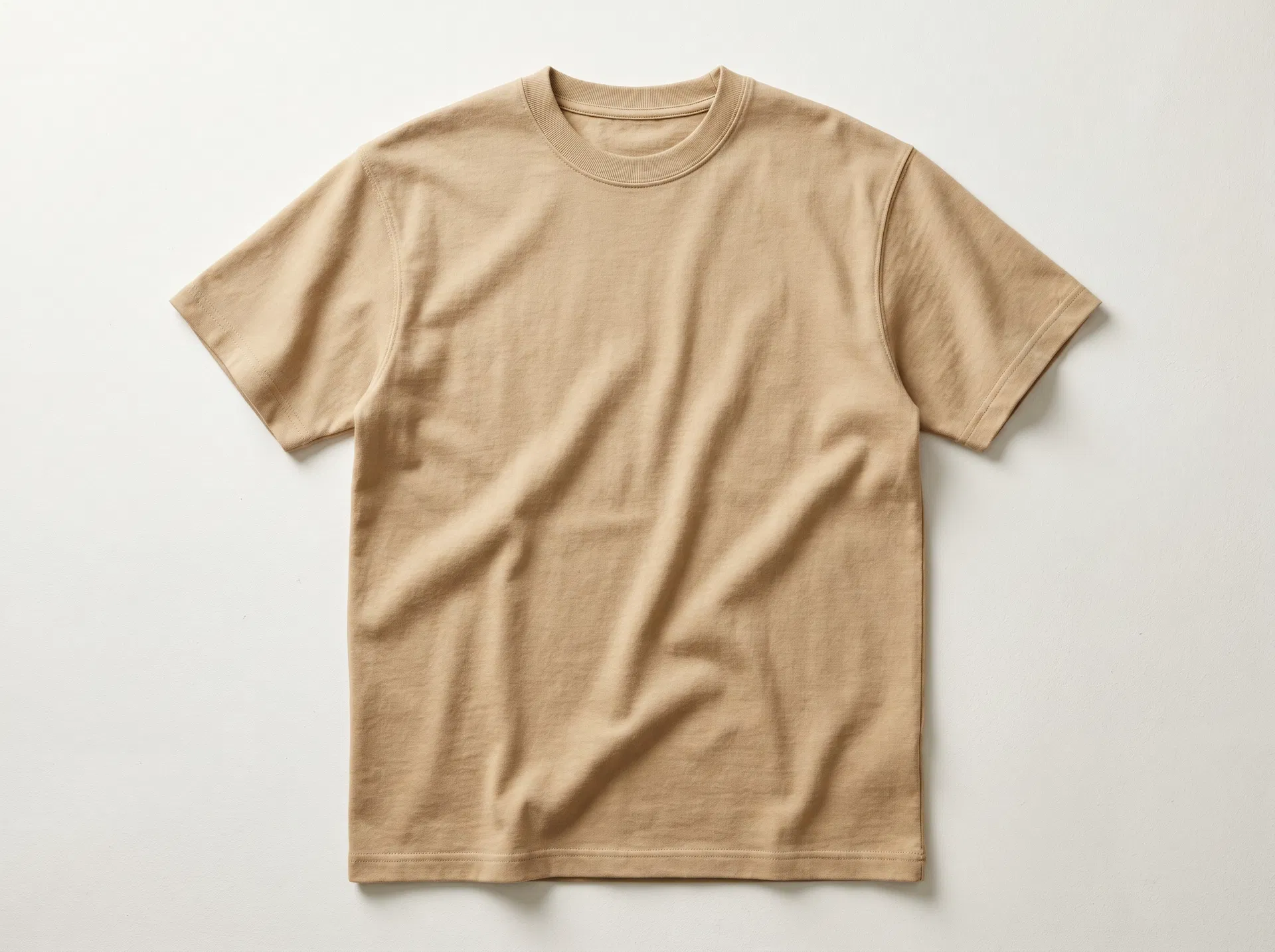
Representative product, packing, and factory workflow images for Corporate Uniform Shirt Fabric Durability buyers evaluating Brandex Sourcing as a Bangladesh apparel manufacturer.